This Month's Study
Friday, January 20, 2012
January's Newsletter
Personal Message from Dawn
This Month's Study
As most of
you know I closed the classroom in August order to take care of the medical
needs of our children. I also took the opportunity to go full time at CNM in
order to get closer to my goal of getting an AA in Early Education. The time
has paid off! Our children are healthier and I finished the semester with three
A’s and two B’s. Yea! I am very excited to put into practice what I have
learned. Oh how we have missed little ones roaming around the house and look
forward to establishing some lasting relationships with the families our Lord
provides!
This Month's Study
As we talk about Community Helpers, and do many
play activities, we will learn and practice so many new words that will help us
in communicating, reading, and writing throughout our lives. We also will learn
a lot about social skills. We will learn that in our community there are people
who take care of all the things in our neighborhoods so we can learn, be safe
and stay healthy. There are community helpers, such as teachers, doctors,
dentists, police officers and firefighters. We will talk about how doctors and
dentists help us to stay healthy.

Doctors help us by giving us shots to keep us
from getting diseases, or when we feel sick, and they listen to our hears and
lungs to make sure they are healthy. Dentists help us by cleaning and fixing
our teeth. We will draw about when we went to the doctor or dentist. We will
talk about how police officers keep us safe. They can help us find our parents
if we are lost. We will learn that if there is an emergency and we need help,
we can call the police by dialing “911” on the phone. We will learn that firefighters are who
we call if there is a fire. They spray water or chemicals on the fire to put it
out. We can call the firefighters by dialing “911” on the phone, just like the police.
Firefighters also
teach us what to do and how to stay safe if there is a fire. We will learn the
mail carriers are community helpers who help us by delivering our mail and
bring mail or letters to our homes. Some mail carriers deliver mail in a car
while others use a big truck, an airplane or even walk. We will be writing
letters to ourselves. We will put our names, addresses and a postage stamp on
the envelopes so that it can be mailed. 
Wednesday, November 16, 2011
Assessments within our Child Care
Garden of Blessings Child Care uses four different assessment tools within their program to insure quality care within its program. One assessment tool is used to evaluate the business administration of the program. Another assessment tool evaluates the environment that the children and their families are exposed to. The other two assessment toolsfocus on the children themselves and the developmental progress each child has made within the program. These tools ensure that Garden of Blessings Child Care upholds excellent standards that have been proven to be successful through research.
The Business Administration Scale for family child care (BAS) by Teri N. Talen and Paula Jorde Bloom is used to evaluate the quality of business and professional practice of Garden of Blessings program. The BAS focuses on better “communication with parents, financial stability, reduced risk in operating a home business, and compliance with legal requirements.” (Talan, T. 2009) It uses a seven point rating scale that allows Garden of Blessings to measure from inadequate to excellent in the overall quality of the administration part of the business. When emphasis is put on high quality administration approaches families can feel secure knowing that their child’s school will be around to help prepare them for kindergarten.
The Family Child Care Environment Rating Scale (FCCERS) by Thelma Harms, Debby Cryer, and Richard M. Clifford is used to evaluate the environment that Garden of Blessings provides for its provider and their families. Just like BAS the FCCERS uses a seven point rating scale that measures quality. The FCCERS focuses on the “environment, including organization of space, interaction, activities, and schedule” (Harms, T. 2007)for the children along with ‘provisions for parents and providers”. A lot of what a person sees and hears when coming into Garden of Blessings’ program comes from this assessment tool.
The two most important tools used by Garden of Blessings Child Care is High/Scope COR (Child Observation Record) for Infants and Toddlers and High/Scope COR for Preschoolers. The High/Scope COR centers on the learning and development of the early childhood years. “In the High/Scope program children learn through active involvement with people, materials, events and ideas.” (High/Scope 2002) The teacher of Garden of Blessings is also able to decide what to teach, how to teach and when to make changes in teaching based on the assessment of a child by using High/Scope COR. Garden of Blessings shares these outcomes of the assessment with each child’s family. Garden of Blessings values this assessment tool because allows a partnership with each child’s guardians. It is set up to share information about the child with the child’s family to ensure that what is working at school can also be used to work at home and visa versa.
Garden of Blessings strives to be an excellent program as a child care business for its children and their families. Any assessment tool is only as good as the authority behind it that makes sure it is put into practice. With this said Garden of Blessings has allowed itself to participate in the AIM High Program. The AIM High Program comes in annually to evaluate Garden of Blessings program and grades it with a scale of one to five stars. Garden of Blessings also welcomes any inquires from current family or possible future families that they serve.
References
Harms, T. , Cyer, D. , Clifford, R. (2007) Family child care environment rating scales
revised edition. New York, NY; Teachers College Press.
High/Scope Education Research Foundation (2002) Parent guide to the infant-toddler cor.
Ypsilanti, MI: High/Scope Press.
The Business Administration Scale for family child care (BAS) by Teri N. Talen and Paula Jorde Bloom is used to evaluate the quality of business and professional practice of Garden of Blessings program. The BAS focuses on better “communication with parents, financial stability, reduced risk in operating a home business, and compliance with legal requirements.” (Talan, T. 2009) It uses a seven point rating scale that allows Garden of Blessings to measure from inadequate to excellent in the overall quality of the administration part of the business. When emphasis is put on high quality administration approaches families can feel secure knowing that their child’s school will be around to help prepare them for kindergarten.
The Family Child Care Environment Rating Scale (FCCERS) by Thelma Harms, Debby Cryer, and Richard M. Clifford is used to evaluate the environment that Garden of Blessings provides for its provider and their families. Just like BAS the FCCERS uses a seven point rating scale that measures quality. The FCCERS focuses on the “environment, including organization of space, interaction, activities, and schedule” (Harms, T. 2007)for the children along with ‘provisions for parents and providers”. A lot of what a person sees and hears when coming into Garden of Blessings’ program comes from this assessment tool.
The two most important tools used by Garden of Blessings Child Care is High/Scope COR (Child Observation Record) for Infants and Toddlers and High/Scope COR for Preschoolers. The High/Scope COR centers on the learning and development of the early childhood years. “In the High/Scope program children learn through active involvement with people, materials, events and ideas.” (High/Scope 2002) The teacher of Garden of Blessings is also able to decide what to teach, how to teach and when to make changes in teaching based on the assessment of a child by using High/Scope COR. Garden of Blessings shares these outcomes of the assessment with each child’s family. Garden of Blessings values this assessment tool because allows a partnership with each child’s guardians. It is set up to share information about the child with the child’s family to ensure that what is working at school can also be used to work at home and visa versa.
Garden of Blessings strives to be an excellent program as a child care business for its children and their families. Any assessment tool is only as good as the authority behind it that makes sure it is put into practice. With this said Garden of Blessings has allowed itself to participate in the AIM High Program. The AIM High Program comes in annually to evaluate Garden of Blessings program and grades it with a scale of one to five stars. Garden of Blessings also welcomes any inquires from current family or possible future families that they serve.
References
Harms, T. , Cyer, D. , Clifford, R. (2007) Family child care environment rating scales
revised edition. New York, NY; Teachers College Press.
High/Scope Education Research Foundation (2002) Parent guide to the infant-toddler cor.
Ypsilanti, MI: High/Scope Press.
Talan, T. , Bloom, P. (2009) . Business administration scale for family child care. New York,
NY: Teachers College Press.
Monday, July 11, 2011
Arts & Crafts
Monday, July 4, 2011
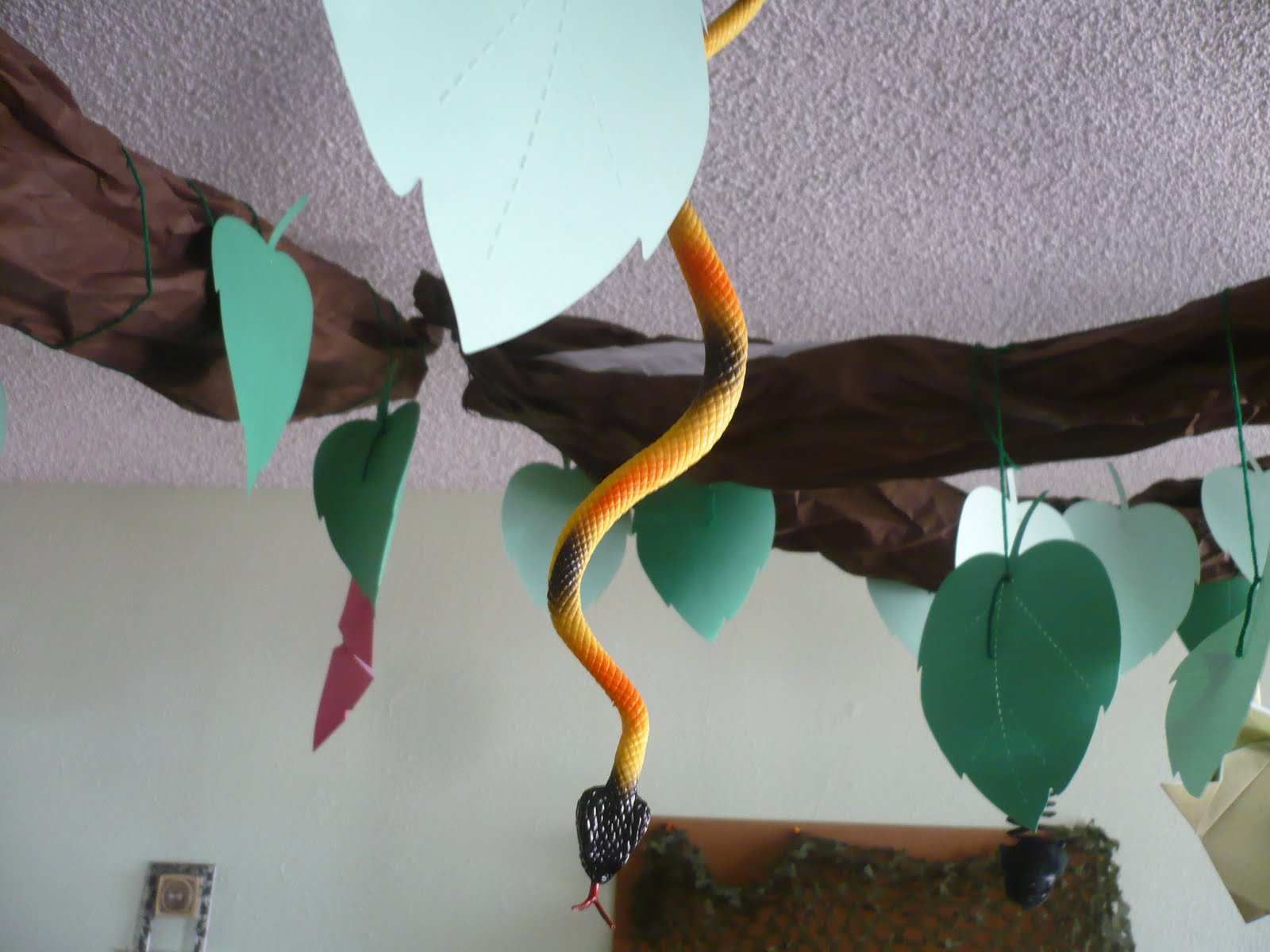
The Jungle
The Campfire Glow Lantern works two ways. First, light up the base camp with the bright white luminance from the upper dome. Then, flip a switch to activate the warm flickering campfire glow built in the lantern's base. No flames. No heat. Just a comforting illusion - and an excue to gather 'round the old campfire to sing campy songs or tell tales. http://www.backyardsafari.com/
Pick, brush, or probe. Whether gathering samples of excavating that dig site, up close or in hard to reach spaces, these sturdy tools will handle hundresds of fields tasks. Clipped to the Cargo Vest they stay within reach to snap off - and back on - with single-handed ease. Tough, yet safe, nylon plastic won't wear out. And when your child discover that intersting find, they can signal the rest of the field crew with the hight audible field safety whistle. http://www.backyardsafari.com/
The Backyard Safari FIELD UTILITY BELT is Essential Field Gear for every purpose. There's a large Velcro pouch for storage. A sturdy tool holder supports a rock pick hammer or ther solid tools. Two adjustabel d-rings let you clip-on any varity of Essential Field Gear from the Backyard Safari collection. Two Collection bottles let you gather specimens in the field. http://www.backyardsafari.com/
There are Thousands of crawling, flying, buzzing bugs in your backyard- catch them live with the Lazer Light Bug Vac! Look at bugs up-close with the built-in magnifying lens.
The 3-IN-1 Compast Tool has features that lead to adventure no matter which way you're headed. http://www.backyardsafari.com/
It's rugged, and tough enought for all your outdoor adventures. Pleanty of cargo pockets means lots of space to lead up. Six D-Rings and tow shoulder epaulets let the clip and hang more essential gear. A large zipper pocket stores the trusty binoculars and clear-view chest pocket store the Pop-up Filed Guides. The back of the vest features a one-size fits-all adjustable strap and two extral mesh pockets for storing extra gear. http://www.backyardsafari.com/Monday, June 6, 2011
Tuesday, May 24, 2011
Fun in the Sun
FUN IN THE SUN!
This unit will cover basic scientific information about one of the most important things int eh natural world - the Sun. Children learn why the sun in important to all, how we must sometimes protect ourselves from its rays, and its important to life on Earth. In addition, there are fun experiences with recognizing letters and numbers, hearing phonetic sounds and making simple graphs. Talking and learning about the natural world is interesting to children. It builds science knowledge while providing a meaningful context for increasing vocabulary and for learning reading, writing, and math skills. We will be discovering that the sun gives us light and warmth. We will be talking about how we can see the sun in the sky when we go outside. Sometimes the sun is hidden from us by the clouds or trees. We will also be learning that the sun is our daytime star. It is the only star that we can see in the day. We eill be learning about protecting ourselves from the sun by waring sunscreen and hats and by drinking lots of water when we play outside. the sun can be so hot and bright that it can burn us or make us too hot. There will be the discovery that plants need the light form the sun to grow. During the summer the sun spends a long time in the sky and we have long days and short nights. During the winter, the days are short and the nights are long. We will also be talking aobut how the sun moves across the sky, moving from east to west and hiding from us at night.
Our Nemo hanging in the classroom.
Our Sperm Whale hanging in the classroom.
Sand Toys for our sand pile outside.
Books about the sun and what it does for us.
More books about the sun and what it does for us.
What our classroom looks like.
Our beach bags.
Beach Ball.
Let's go Fishing!
Floor puzzles showing the sun in each season.
Bright flashlights to use with the globe. We help children pretend the flashlight is shining on the earth as the Sun does.
The summer would not be complete without a good BBQ!
We show how to hold the prism in sunlight to create a rainbow.
Stuffed Sea Animals
Real Sea Fossils!
Sea Shells
Let's not forget the sunscreen. This bottle it empty and put in the dramtic play so the kids can pretend to put some on.
Sunglasses to shade our eyes.
Saturday, April 23, 2011
We care about your child's HEALTH, SAFETY, and NUTRITION
Garden of Blessings Child Care cares about your child’s health, safety, and nutrition. For this reason we teach hygiene skills to reduce the spread of contagious illnesses. Research shows that healthy children are better learners. We discover that germs are what make us sick and that we need to be good germ fighters to stay healthy. In order to take care of ourselves, we need to be good germ fighters and do things to keep viruses and bacteria from attacking us. One way we teach children to take care of themselves from viruses and bacteria is teaching proper hand washing techniques. We wash our hands various times throughout the day. For example, when we come in from outside we go into the dinning room to wash our hands. After potty we will wash our hands in the bathroom. Before and after eating we will wash our hands. When we wash our hands we 1st wet our hands, 2nd put soap on our hands, 3rd rub and scrub our hands and wrist. It is recommended that you wash your hands for at least 20 seconds. This is a perfect opportunity to sing the ABC song. We then rinse our hands until all the soap is removed. We take a paper towel, dry our hands, use the towel to turn the water off and then throw it into the trash.
Garden of Blessings takes many precautions necessary to ensure that illness and communicable diseases are kept to a minimum within our home. However, sickness does happen and is to be expected. Therefore, the safety of all the children within our care is planned for and guidelines are in place. Each child will be observed daily for illness. Children are considered ill when there is a fever in excess of 100.4 degrees, vomiting, excessive diarrhea, or any potentially contagious disorder (www.health.state.nm.us). When a child becomes ill during his or her day, parents will be notified and expected to pick up their child as soon as possible. The child will be kept isolated from the others as much as possible to try to prevent the spreading of the illness. If a contagious disorder has been diagnosed a plan based on the State of NM (www.health.state.nm.us) will be discussed with parents/gardians as to when the child will be able to return to class.
Research shows that children who eat good nutritional meals have more energy, can think clearer, and can focus better in order to learn effectively. Garden of Blessings provides an environment that allows children to be a part their nutritional choices. Eating healthy starts way before food is set before a child to eat. We have field trips to the farmers market and explore various selections of fruits and vegetables. Children are welcome to choose what they would like to bring into the kitchen. Then children are invited into the kitchen to be a part of food preparations. We encourage ownership in making a healthy meal by allowing children to wash, cut, pour, stir, peel, and serve the food to one another. We enjoy the social encounter of sitting down together to enjoy these choices. We encourage the children to discover the wonders of various tastes and textures that foods have to offer by encouraging them to discuss their experiences. Starting in the spring of every year we plan a garden. The children learn where some of their food comes from. They discover the importance of caring for the garden by watering the plants. They take pride in pulling weeds to prevent them from stealing water and nutrients from their plants.
Garden of Blessings welcomes the involvement and support of parents/guardians concerning their child’s health, safety, and nutritional well being. There are some simple things that can be done at home to show that involvement. One is encouraging the child to show what the steps are for good hand washing. Because sickness happens we suggest parents/guardians to consider establishing a family plan for when their child is sick. Whether that is setting aside sick time from work or established other adults within the child’s life to care for the child. Another suggestion would be to evolve their child in the grocery shopping and talk about the various foods served at the table and how they are nutritious.
Garden of Blessings takes many precautions necessary to ensure that illness and communicable diseases are kept to a minimum within our home. However, sickness does happen and is to be expected. Therefore, the safety of all the children within our care is planned for and guidelines are in place. Each child will be observed daily for illness. Children are considered ill when there is a fever in excess of 100.4 degrees, vomiting, excessive diarrhea, or any potentially contagious disorder (www.health.state.nm.us). When a child becomes ill during his or her day, parents will be notified and expected to pick up their child as soon as possible. The child will be kept isolated from the others as much as possible to try to prevent the spreading of the illness. If a contagious disorder has been diagnosed a plan based on the State of NM (www.health.state.nm.us) will be discussed with parents/gardians as to when the child will be able to return to class.
Research shows that children who eat good nutritional meals have more energy, can think clearer, and can focus better in order to learn effectively. Garden of Blessings provides an environment that allows children to be a part their nutritional choices. Eating healthy starts way before food is set before a child to eat. We have field trips to the farmers market and explore various selections of fruits and vegetables. Children are welcome to choose what they would like to bring into the kitchen. Then children are invited into the kitchen to be a part of food preparations. We encourage ownership in making a healthy meal by allowing children to wash, cut, pour, stir, peel, and serve the food to one another. We enjoy the social encounter of sitting down together to enjoy these choices. We encourage the children to discover the wonders of various tastes and textures that foods have to offer by encouraging them to discuss their experiences. Starting in the spring of every year we plan a garden. The children learn where some of their food comes from. They discover the importance of caring for the garden by watering the plants. They take pride in pulling weeds to prevent them from stealing water and nutrients from their plants.
Garden of Blessings welcomes the involvement and support of parents/guardians concerning their child’s health, safety, and nutritional well being. There are some simple things that can be done at home to show that involvement. One is encouraging the child to show what the steps are for good hand washing. Because sickness happens we suggest parents/guardians to consider establishing a family plan for when their child is sick. Whether that is setting aside sick time from work or established other adults within the child’s life to care for the child. Another suggestion would be to evolve their child in the grocery shopping and talk about the various foods served at the table and how they are nutritious.
Subscribe to:
Posts (Atom)